
Cascade of Errors
The loss of Lynette Hooker, from SV Soulmate

A few days after Lynette Hooker disappeared into the waters off Elbow Cay, I received a message on my phone through No Foreign Lands, the social media app used by cruisers throughout the Bahamas and beyond. It was from Tim Stelloh of NBC News.
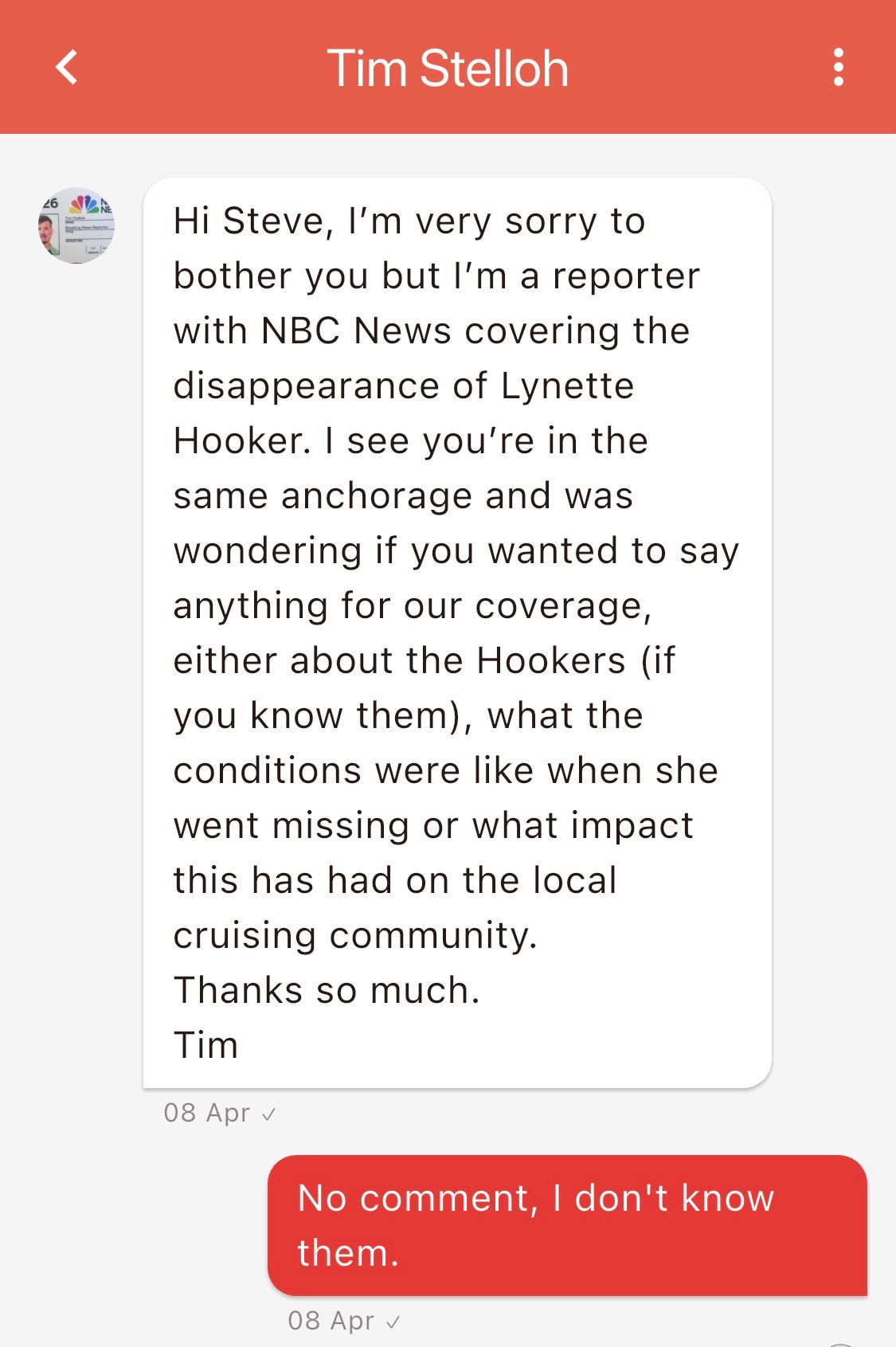
My reply was brief: “No comment, I don’t know them.”
That was the truth. I didn’t know Brian and Lynette Hooker. I didn’t know their boat, Soulmate, but this is a story that has seized public attention with unusual speed.
What I’ve since learned is that we had anchored in the same spots three times during our Abacos passage without ever crossing paths. That particular kind of ghost-ship proximity happens in the cruising world, where you share the same water with people whose names you’ll only learn later, under terrible circumstances. Soulmate is now moored a stone’s throw from Angelfish 🐠 in Marsh Harbour, empty since Brian’s arrest.
I replied to Tim the same way I’m going to begin this piece: Because right now, nobody who wasn’t on that 8-foot dinghy knows exactly what happened on the night of April 4th. But in the absence of knowing, the internet has filled the void with certainty.
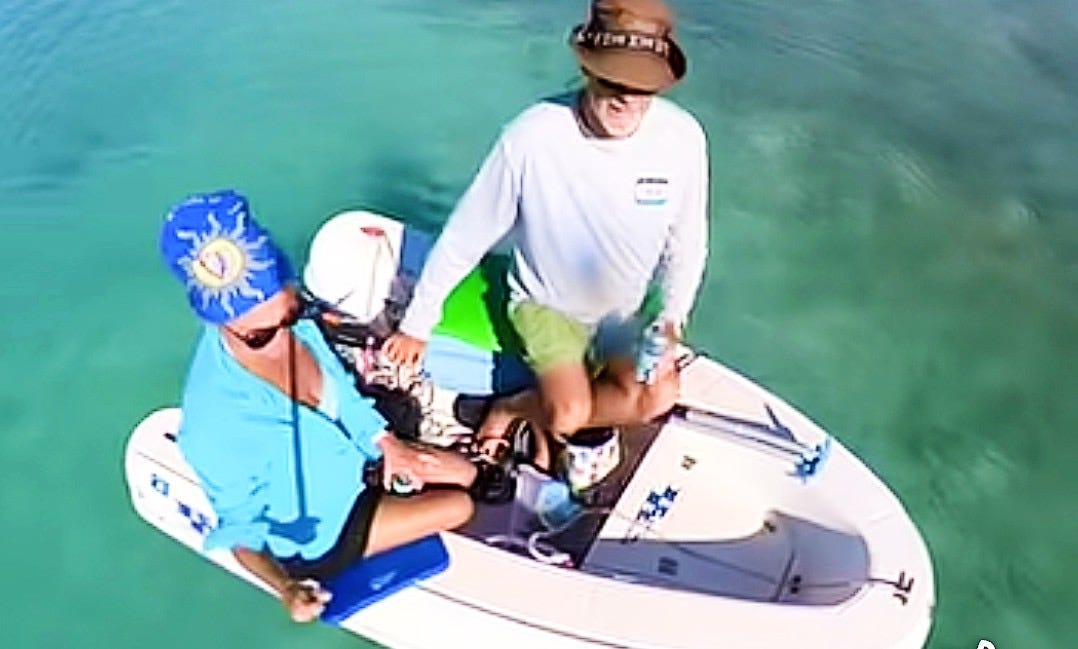
Source: Facebook
What We Know
The facts, as reported and confirmed by the Royal Bahamas Police Force, are these: Brian and Lynette Hooker, both from Michigan, departed the Abaco Inn at White Sound on Elbow Cay by dinghy at approximately 7:30 p.m. on Saturday, April 4th. They were headed to their anchored sailboat, Soulmate, near Aunt Pat’s Bay along Elbow Cay’s western shore. The sun had set four minutes earlier. It should have been a 1.8 mile slow run with their electric outboard motor. They never got there.
Brian told police that Lynette fell overboard in rough conditions. She was wearing the engine’s safety lanyard, the kill switch. When she went in, the lanyard cut power to the motor the moment she left the boat. He told authorities the currents carried her away quickly, that he last saw her swimming toward the sailboat, and that he tried to paddle to shore after an oar broke. He arrived at Marsh Harbour Boat Yard in the early hours of Sunday morning, where he alerted someone who called the police. A search lasting days, involving the Royal Bahamas Police Force, the Royal Bahamas Defence Force, Hope Town Volunteer Fire and Rescue, and the U.S. Coast Guard, has found no trace of Lynette Hooker. The search has been reclassified as a recovery operation.
Brian Hooker was arrested for questioning in connection with his wife’s disappearance. He has not been charged. His attorney states he categorically denies any wrongdoing. In his own words, recorded in an audio message later made public: “What followed was a cascade of failures, and it’s something I’m never going to forgive myself for.”
That phrase, cascade of failures, is the most nautically honest thing anyone has said about that night. As a sailor, cruising full-time for five years, I know the dangers of that phrase. It is the biggest fear of anyone who spends a fair amount of time at sea. One bad decision doesn’t kill you. It’s the second one, and the third, each closing off another exit, until the sea has you forever.
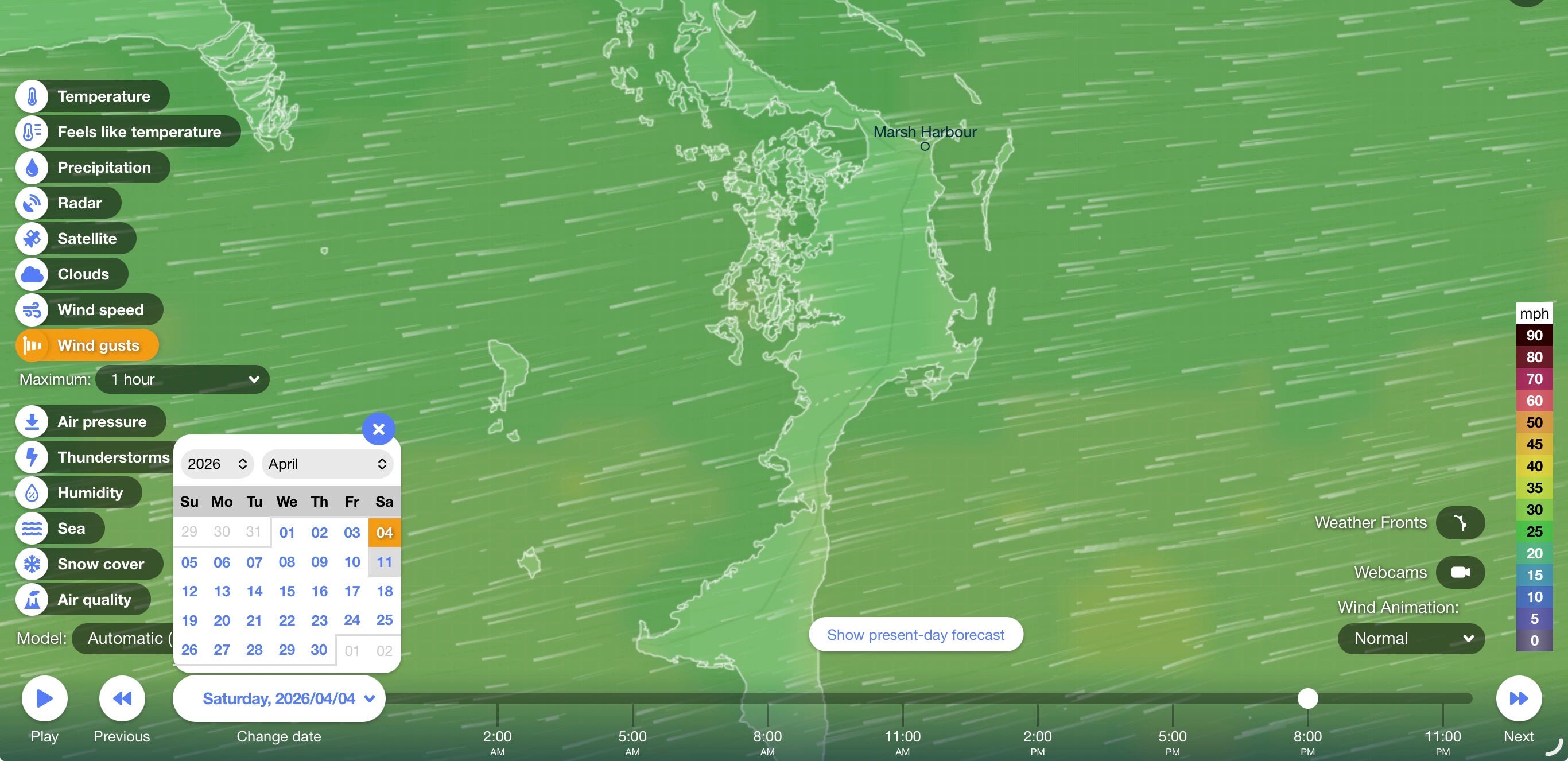
Source: www.ventusky.com
The Sea State, April 4th
K and I were anchored that night among 20 to 30 boats in the waters north of where Soulmate was moored, us being closer to Hope Town. The wind was up. The sea was very choppy. These are not unusual conditions for the Abacos in early April. Trade winds build in the afternoons and don’t always settle by evening. We have been experiencing a spate of these mistral winds of late, usually lasting for days. What I can tell you, as someone who was riding at anchor that night in those same waters: it was not a calm night. It was the kind of night that makes you glad to be safely on a 45-foot boat and not in a tender.
What I can also tell you is that we had our VHF radio on that night. We usually do when anchored in foul weather conditions. Boats can drag, emergencies can happen. All cruisers listen, ready to offer assistance as needed. That said, no cruiser, including Angelfish 🐠, heard a radio call from local authorities coordinating a search.
For comparison, in United States waters the U.S. Coast Guard’s standard procedure upon receiving a report of a person overboard is to issue an Urgent Marine Information Broadcast (UMIB) or Pan-Pan on VHF Channel 16, alerting all vessels in the area to maintain a lookout. In Bahamian waters, however, the U.S. Coast Guard has no primary jurisdiction. Initial radio alerts are the responsibility of local authorities. No such broadcast was reported or heard by cruisers monitoring VHF that night, any one of which might have launched a dinghy to help.
I don’t know whether that reflects a gap in the response or simply the limits of what was knowable in those first desperate hours.
Credit: sv Angelfish 🐠, the ocean side of Elbow Cay April 4th 2026
The Cascade
Brian Hooker called it a cascade of failures. Every sailor who has read the accounts of that night knows exactly what he means, because we have done the mental inventory ourselves.
No personal flotation devices. The Hookers were not wearing life jackets for a dinghy ride at night in building wind and chop. That morning, the Abaco Cruising Net on VHF channel 68 had broadcast that the Bahamian weather service had issued a small craft advisory for the area. I won’t pretend this is unusual. We are all guilty of a tender run without suiting up, especially at the end of a long day. But the math of survival changes the moment someone goes over the side after dark. A PFD doesn’t guarantee you live. The absence of one narrows the odds considerably.
No handheld VHF radio. There is no mention in any account of a handheld radio aboard the dinghy. Every cruising boat carries at least one, as does Angelfish 🐠. A handheld VHF on that dinghy could have reached every vessel in that anchorage within seconds of Lynette going overboard. It could have reached local authorities directly. It weighs less than a pound. The Soulmate tender was on a 1.8-mile run that night back to the boat. Two miles in rough seas is a treacherous passage. On Angelfish 🐠, any trip longer than a half mile, the portable should be aboard. Having said that, there are countless times we have not done that.
No spare engine key. When Lynette went in with the safety lanyard, the engine died. That is the lanyard’s entire purpose. If the driver leaves the helm, the boat stops. It is a feature designed to save lives. But when the person in the water is holding the lanyard, the boat becomes a paddle craft. Most cruisers don’t carry a spare key for the dinghy engine. We do, because years ago, in the tumultuous waters off New York City, I nearly went over the side myself. After that, I hid a spare key on Coconut 🥥, and it has stayed there ever since. Not every sailor learns that lesson before they need it.
I should mention here that these rigid inflatable boats, called RIBs, are easy to fall out of, especially in rough seas. In fact, when Brian was arrested, it was rough here, even in Marsh Harbour, and his lawyer reports Brian fell overboard, in handcuffs, while in custody.
No functional oars. Reports indicate the dinghy had oar sockets, but Brian describes a pin breaking, leaving him effectively without propulsion. In the waters between Elbow Cay and Marsh Harbour, the current alone might not have been enough to move an 8-foot RIB four to six miles overnight. This part of the Abacos is not known for powerful currents. But wind is another matter entirely. At 18 to 24 knots, a small rigid inflatable dinghy becomes less of a boat and more of a sail. With no engine, no functional oars, and a hull with enough freeboard to catch every gust, that dinghy was going where the wind sent it. That night, the wind sent it west toward Marsh Harbour, and away from Lynette.
And then there is the question of alcohol. This is not speculation inserted to smear anyone. Richard Cook, leader of the Hope Town Volunteer Fire & Rescue team and among the first on scene, told People magazine he believed alcohol was a factor. His words were simply “a lot of bad decisions.” Lynette’s daughter has spoken publicly about drinking in the marriage. The couple’s own YouTube and Instagram document what any honest sailor would recognize: the island cruising life includes sundowners, rum drinks at beach bars, and wine in the cockpit. I also have been known to imbibe in this culture. People who live in glass houses and all.
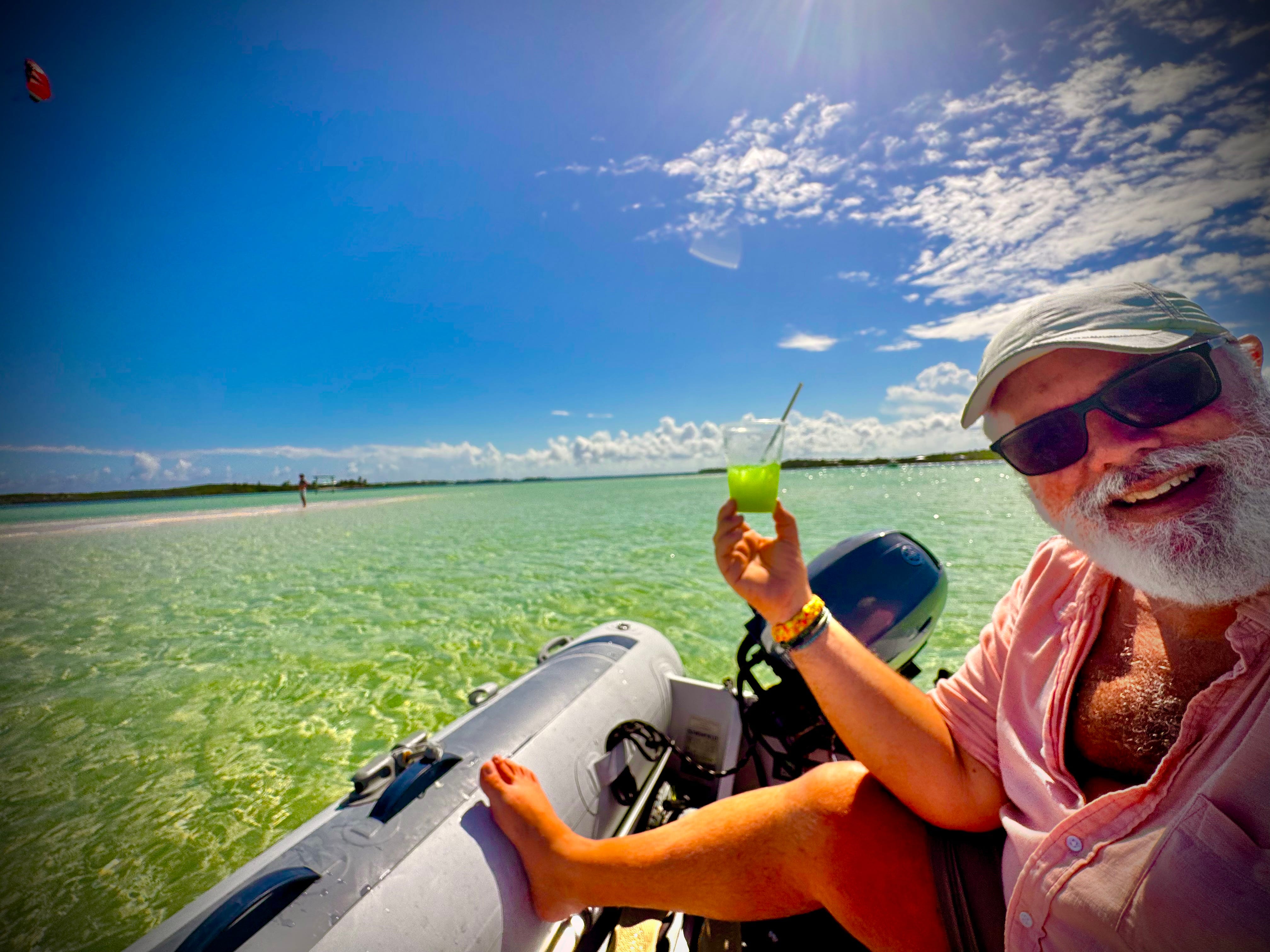
Photo credit: sv Angelfish 🐠, Tahiti Beach, Elbow Cay. Somewhere nearby, SV Soulmate rides at anchor.
It is a culture, not a character flaw. A dinner at the Abaco Inn, a couple of cocktails, and a dark tender ride in building chop can cloud judgment without requiring a criminal motive. The sea does not need you to be a murderer. It only needs you to be impaired enough to make one bad decision that leads to another.
Put it all together: no PFDs, no radio, no spare key, compromised oars, darkness, wind, chop. What you have is what the sea does to people who give Poseidon an opening.
The picture conjured of Brian Hooker, leaning over the bow of a powerless dinghy, paddling with his hands into a dark and choppy night trying to find his bride, is the image of a man who understood, probably right at that moment, the full weight of what had just gone wrong.
The Court of Facebook
I have spent a significant part of my professional life as a documentary editor, and have worked on films of wrongful conviction. I have sat (in the edit room) with men who lost years, sometimes decades, in prisons they should never have entered, convicted not by evidence but by a narrative—by a story that felt true, long before any courtroom opened its doors.
I know what public conviction looks like. I’m watching it happen in real time.
What has happened to Brian Hooker on Facebook in the past week is a version of that. The comment sections are filled with “Dateline episode analysis,” an “always the husband” narrative, with detailed theories about motive constructed entirely from the statements of people who were not on that boat.
The daughter’s account of a troubled relationship, which may be completely true and which investigators should absolutely pursue, has been fed into the machine and emerged as verdict.
Brian Hooker may be guilty of something. He may be guilty of terrible judgment and nothing else. He may be guilty of a crime. I don’t know. The Royal Bahamas Police Force, who have questioned him and not yet charged him, are still working to find out. My understanding is he will be released soon if her body is not found.
What I do know is this: the sea is a dangerous force that requires respect. It doesn’t care about motives or marriages or Dateline narratives. It cares about wind speed, sea conditions, and current. It has taken lives in these waters long before Brian and Lynette Hooker arrived, and it will take lives here long after this story fades from the news cycle.
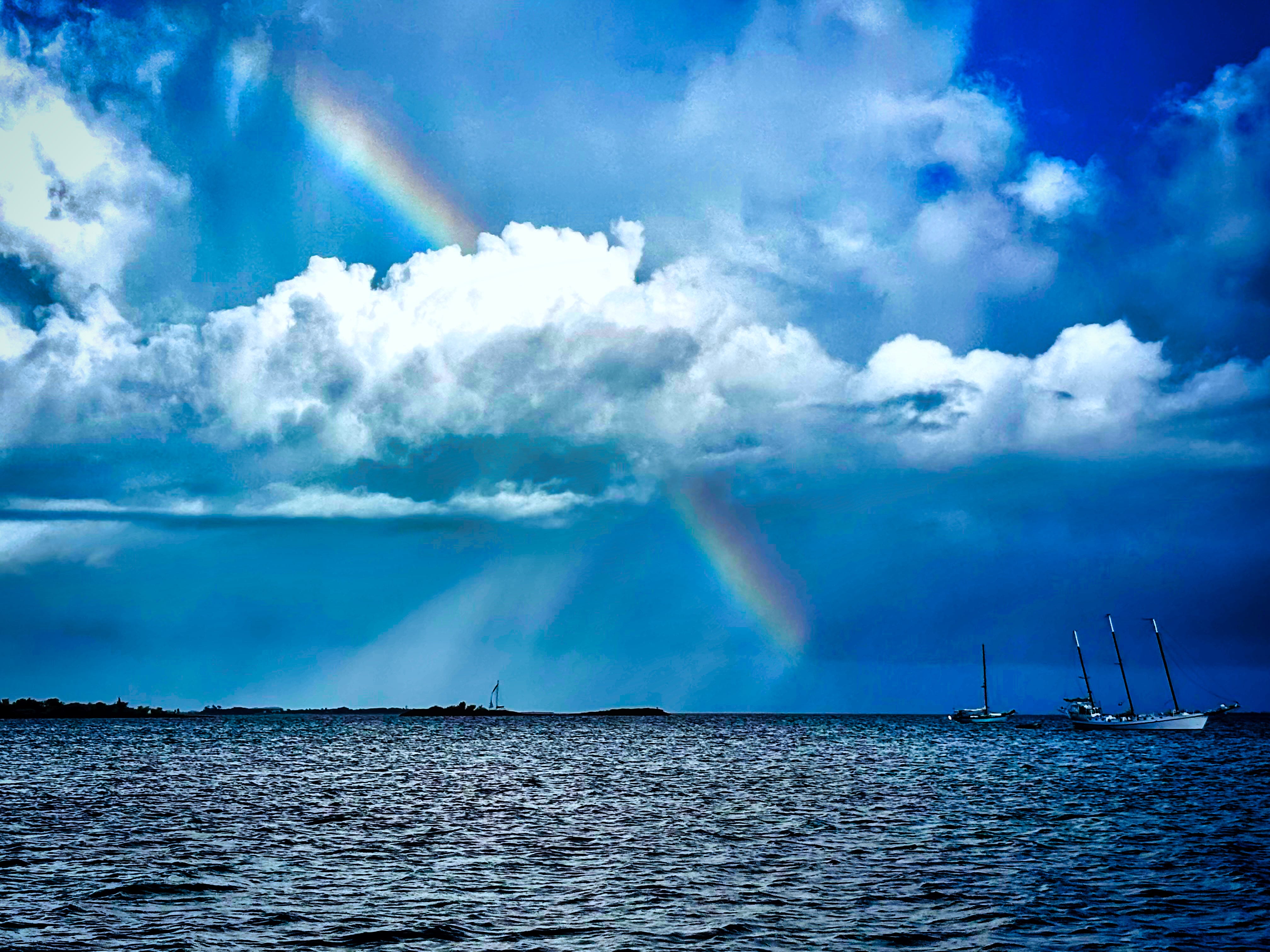
Photo credit: sv Angelfish 🐠: Saturday April 4th, storm clouds and unsettled seas outside Hope Town, Elbow Cay.
What Lynette Deserves
Lynette Hooker was 55 years old. She was a sailor, a traveler, a mother. She and Brian documented their life aboard Soulmate under the name The Sailing Hookers, a community not unlike the one K and I have built here. She sent a photograph from White Sound just before they got in that dinghy, the last image anyone has of her in the world she loved.
She deserves a real investigation. She deserves the kind of methodical, evidence-based process that either confirms an accident or surfaces the truth of something worse. She does not deserve to have her death, and her husband’s culpability or innocence, adjudicated in Facebook comment sections by people who have never been on the water at night in 20-plus-knot winds in a broken tender.
The sea took Lynette Hooker. What exactly put her in the sea’s path is still being determined by people with actual jurisdiction and actual evidence. Let them work.
K and I will pause tonight and think of Lynette, her family in grief, and the boat Soulmate that sits quietly nearby. Godspeed.
— Steve, SV Angelfish 🐠, Marsh Harbour, Abaco
This piece reflects the public record as of April 11, 2026. If new information emerges, it will be noted here. The search for Lynette Hooker continues.
We were anchored next to them in Ft Pierce and chatted with them multiple times. A cascade of errors is exactly right.
You’ve written a level and thoughtful account of what we do know adds up to many mistakes. I need to curb my social comments and will do so. However, I am curious about 1) dinghy looks 6’ not 8’ in pics if they are correct and 2) electric start w magnet - how did it separate from motor? Again, if that info is true. Thanks for writing a great piece. SVNike, Abacos 2000-2013.